Retail media’s next phase of growth won’t come from adding more channels. Instead, it’ll come from connecting them into one omnichannel retail strategy. Advertiser investment is growing, retailers are expanding their media networks, and opportunities to reach shoppers now extend across onsite, offsite, out-of-home, and in-store environments. But as the ecosystem expands, one fundamental challenge often remains: the shopper journey is connected, while the media infrastructure behind it isn’t.
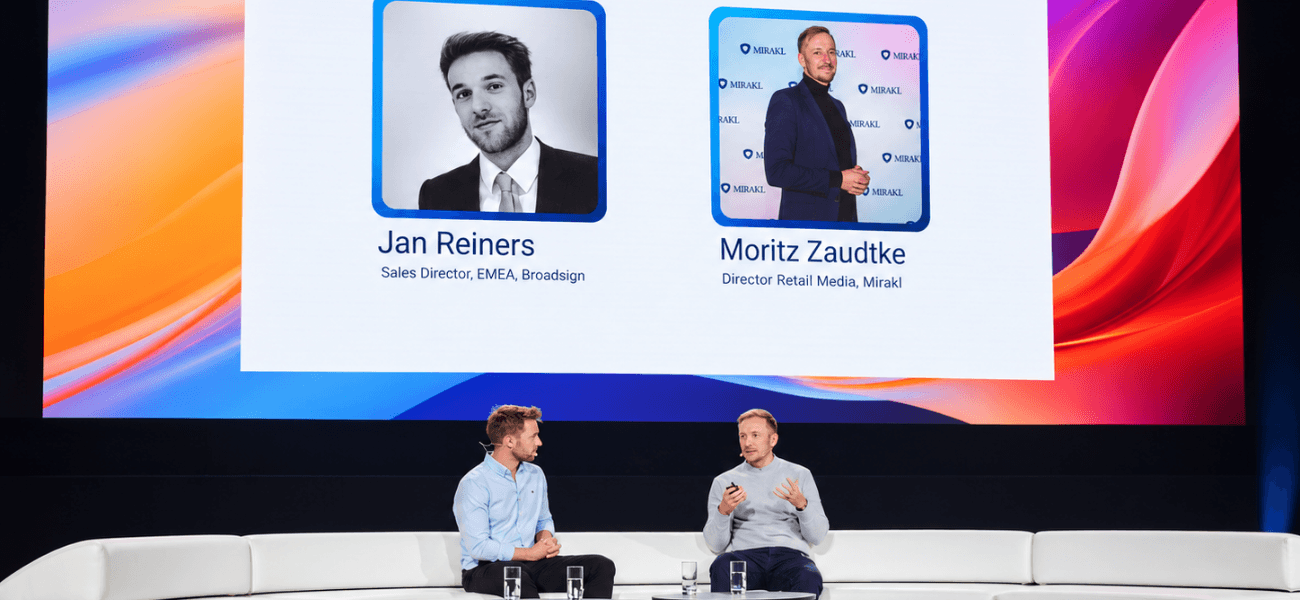
That was the central theme of The Race to Omnichannel Retail Media: Why Connected Channels Will Define the Winners, a fireside-style conversation between Jan Reiners, Sales Director at Broadsign, and Moritz Zaudtke, Director of Retail Media at Mirakl Ads, at DMEXCO 2026.
Together, they explored what it will take to move retail media beyond disconnected channels and towards a more cohesive, measurable media business.
Here are three key takeaways from the conversation.
Omnichannel starts with the campaign objective, not the channel
For many retailers, onsite, offsite, and in-store media still operate through separate teams, systems, and workflows. Advertisers may need to manage different briefs, buying processes and reporting for each channel, making it harder to understand how their investment contributes to a shared business objective.
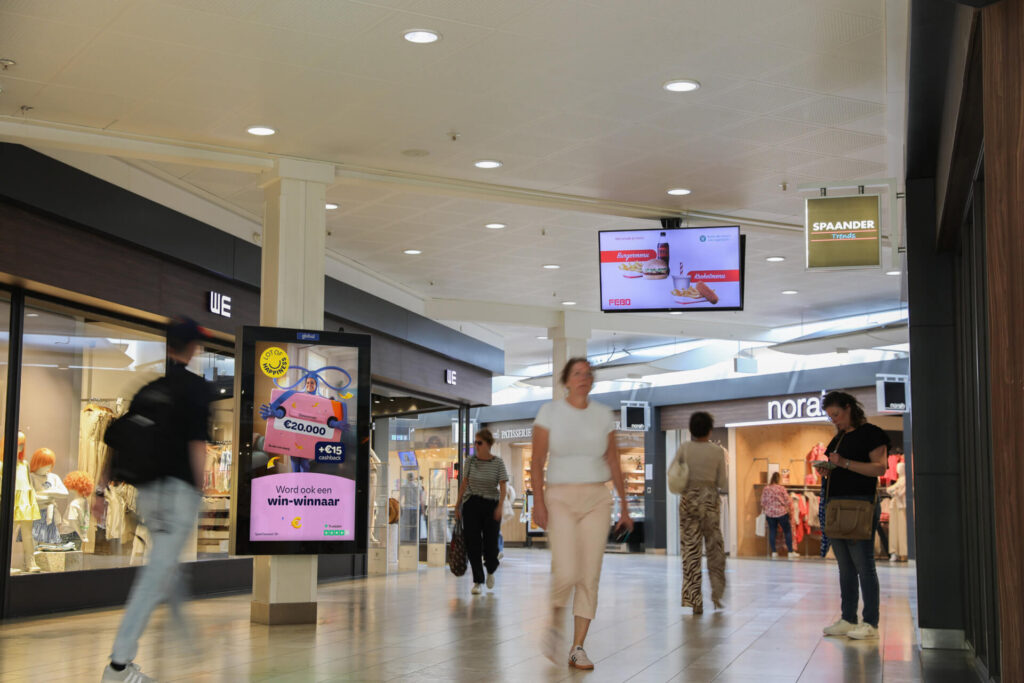
As Jan explained during the discussion, the challenge is especially visible in the physical store: “A retailer might have thousands of screens across its store, but that inventory can still operate almost like a separate media business, with different teams, priorities, and processes behind it.”
This fragmentation creates both operational friction and a commercial challenge. When advertisers struggle to access inventory, compare performance, or understand the value of individual channels, it becomes harder for retailers to demonstrate the full potential of their networks.
The opportunity is to change the starting point. Rather than building separate campaigns around individual channels, retailers and advertisers should begin with the campaign objective, audience, products, budget and timing. From there, they can determine which combination of media is best suited to the goal.
As Moritz put it: “The question shouldn’t be whether an advertiser should buy online or in-store. It should be what role each channel can play against the campaign objective.”
On-site media might support product discovery and conversion, off-site media can extend reach, and in-store media can connect campaigns with shoppers closer to the point of purchase. Each channel brings a different strength. The value of omnichannel comes from planning those strengths together, not from running every campaign everywhere.
Connected activation must simplify execution without sacrificing retailer control
A connected campaign strategy is only valuable if it can be executed without introducing more complexity. When campaigns span multiple environments, advertisers shouldn’t have to navigate every system and workflow behind each channel. Equally, retailers shouldn’t need to coordinate a series of disconnected processes to bring a single campaign to life.
This is where connected infrastructure and automation become essential. The goal isn’t simply to make individual channels faster to activate, but to reduce the friction between them. Importantly, simplifying execution shouldn’t come at the expense of retailer control.
Retailers still need to determine which inventory is available, how it’s packaged and priced, which advertisers can access it, how data is used and how advertising fits within the shopper experience. Those decisions are central to the retailer’s commercial model and the relationship it has built with its customers.
As Jan emphasized: “The technology should make that control easier to manage at scale, not take it away.”
That distinction matters as retail media networks mature. Retailers need infrastructure that supports broader access to inventory and more efficient campaign execution without compromising their ability to set the rules for their own media business.
For advertisers, the benefit is a simpler path from campaign brief to activation. For retailers, it’s the ability to make more of their media inventory accessible while retaining control over the commercial and customer experience.
Connected measurement is what turns omnichannel into a stronger business proposition
Even when a campaign spans multiple channels, its impact can remain difficult to assess if each environment is measured and reported in isolation. Separate reports may show how onsite or in-store media performed individually, but they don’t necessarily explain how each channel contributed to the campaign’s overall objective. That limits an advertiser’s ability to evaluate the full investment and makes it harder for retailers to demonstrate the value of their combined offering.
For Moritz, connecting measurement is a critical part of the solution: “Advertisers shouldn’t have to piece together separate reports to understand how their campaign performed across different channels. They need a clearer view of the campaign as a whole and the role each channel played.”
Importantly, connected measurement doesn’t mean applying identical metrics to every channel. Onsite, offsite, and in-store media serve different purposes, and their performance indicators should reflect those differences. What matters is understanding how each contributes to a shared campaign objective.
As Jan summarized: “The goal isn’t identical measurement. It’s connected measurement.”
With a more complete view of performance across the shopper journey, advertisers can make better-informed investment decisions, while retailers can more effectively demonstrate the value of their networks and identify opportunities for growth.
Bringing digital and physical retail media together
Taken together, these three principles point to a broader shift in how retailers should approach retail media. The next phase isn’t simply about monetizing more touchpoints. It’s about making existing inventory easier to plan, activate and measure as part of a connected media proposition.
As Moritz explained during the session, “The opportunity isn’t just to make in-store inventory available. It’s to make it part of the same retail media ecosystem.”
For retailers, that means thinking beyond individual channels and considering how their entire media ecosystem can work together. For advertisers, it means a more connected approach to campaign planning, activation and measurement across the channels that matter.
Ultimately, retail media’s next phase of growth will depend on how effectively retailers connect their channels into a measurable, commercially valuable shopper journey. As Jan and Moritz made clear at DMEXCO, shoppers don’t experience digital and physical retail as separate worlds. Retail media infrastructure needs to reflect that reality.
The starting point is simple: connect the plan, connect activation and connect measurement.