With more data, technology, and advertising channels at their disposal than ever before, advertisers have no shortage of ways to reach their audiences. But are all these capabilities actually leading to better media decisions?
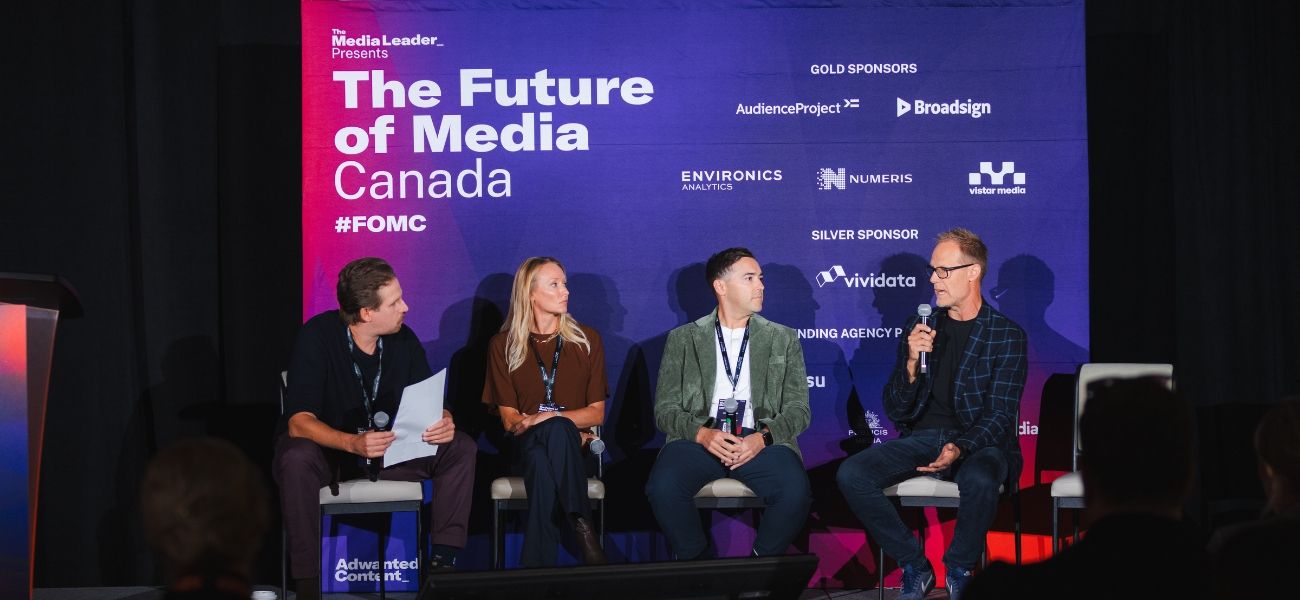
That question was at the heart of a recent Future of Media Canada 2026 panel featuring Adam Kahansky, Regional VP, Sales, Canada at Broadsign; Kelly Miller, Managing Director at Cairns Oneil; and Brian Batenburg, Head of Digital Advertising Sales at The Globe and Mail. Moderated by Wade Kuiken-Rogers, Managing Director and Co-Founder at Avvivi, the conversation examined what’s shaping media planning today, from the limitations of traditional measurement to the growing importance of brand trust and collaboration.
One theme kept emerging: Better media planning requires looking beyond individual channel performance to understand how different investments work together to achieve business objectives.
Here are the key takeaways.
Start with business outcomes, not channel-specific KPIs
The pressure to demonstrate immediate ROI is increasingly shaping where media budgets go, but what’s easiest to measure isn’t always what delivers the greatest value. When advertisers prioritize channels that can prove short-term conversions, they risk overlooking investments that build awareness, influence consideration, and help drive future demand.
For Miller, the risk is that chasing performance at the channel level can come at the expense of the bigger picture. “It’s really about orchestrating the plan so that different channels play a different role in that plan and in solving that problem.”
A channel can deliver impressive results against its own KPIs without necessarily advancing broader business objectives. A low CPM, strong click-through rate, or efficient cost per acquisition might look great in a report, but those numbers don’t necessarily indicate whether a campaign is reaching new audiences or driving incremental growth.
Effective media planning means understanding what each channel contributes to the overall campaign, whether that’s building awareness, influencing consideration, or driving conversions, rather than optimizing every investment toward the same short-term result.
It’s time to look beyond CPMs and last-touch attribution
While CPMs, impressions, and conversions remain important metrics, they don’t always capture the full impact of advertising, particularly when channels influence consumers well before a purchase takes place.
Consider someone who encounters a brand message on a billboard during their commute, sees another ad while reading the news, and eventually makes a purchase after clicking a digital ad. A last-touch attribution model might credit that final interaction without fully accounting for the earlier touchpoints that helped build awareness, familiarity, and trust.
Batenburg highlighted the challenge of measuring the value media creates before someone clicks or converts, particularly the influence of trusted environments on consumer decisions. “It’s not a conversation around CPMs and impressions. It’s about telling stories and meeting them where they’re at.”
Similar considerations apply to out-of-home (OOH), where advertising exposure and subsequent consumer actions aren’t always connected through immediate, click-based signals. But the absence of a click doesn’t mean the absence of impact. Outcomes like brand lift, foot traffic, purchase intent, and purchase data can help demonstrate OOH’s contribution.
Establishing measurement objectives early in the planning process, rather than treating measurement as an afterthought, helps advertisers evaluate the different ways media investments contribute throughout the customer journey.
Better omnichannel planning starts with bringing OOH in earlier
Programmatic technology has made digital OOH (DOOH) more accessible, flexible, and measurable. Yet despite these advancements, OOH is still frequently planned, budgeted, and measured separately from other media investments.
Kahansky emphasized the importance of considering OOH alongside other channels from the outset. “It’s making sure that the tools and the data and the measurement and the opportunity to tell the out-of-home story are side by side with everything else that’s being done in the marketplace,” he said.
Consumers, of course, don’t experience advertising in channel silos. As they move between personal screens and physical environments throughout the day, they might encounter a brand message through streaming video at home, on a digital billboard during their commute, or on an in-store screen while shopping, with each interaction offering an opportunity to reinforce the message.
While programmatic buying makes it easier to activate OOH alongside other digital channels, a connected media strategy also requires collaboration between advertisers, agencies, media owners, and technology partners. Planning across channels from the beginning creates more opportunities to align audience strategies, coordinate creative, and establish measurement approaches that reflect how each investment contributes to the overall campaign.
Where your ad shows up matters more than ever
As AI-generated content becomes increasingly common and consumers navigate a constant stream of digital messages, the environments in which brands advertise are taking on greater importance. Reaching the right audience remains essential, but advertisers are also thinking more carefully about the context in which their messages appear and what that means for brand trust. “We’re having a lot of conversations with our clients right now on trust and brand trust and what they want their brand showing up next to in the consumer’s mindset,” Miller explained.
For advertisers, this puts greater emphasis on the quality of an impression, not just the quantity. Someone scrolling through a crowded social feed may be in a different mindset than someone actively engaging with news content or navigating a physical environment. The surrounding context, competing messages, and level of attention can all influence how advertising is received and remembered.
In OOH, the physical environment creates opportunities to connect with people in moments relevant to their surroundings and activities. A digital screen near a retail location can highlight a nearby offer, while a transit placement can reach commuters as they move through their day. Programmatic buying and dynamic creative can make these messages more relevant by incorporating location, timing, and other contextual signals.
But even a contextually relevant message needs to compete for attention. Understanding what else is happening in a particular environment and how to stand out within it is just as important as choosing the right placement.
More optimization doesn’t always mean better results
Optimization has become a defining feature of modern media buying. With sophisticated tools and real-time performance data, advertisers can continuously refine targeting, adjust budgets, and improve campaign efficiency. But focusing too narrowly on high-performing audiences and immediate conversions can limit opportunities to reach new customers and build future demand.
Effective optimization requires balancing short-term performance with longer-term growth, investing in awareness and consideration alongside conversion-focused activity. Closer collaboration among advertisers, agencies, and media partners can also help identify where campaigns deliver incremental value and where adjustments could improve results.
When it comes to programmatic OOH, this collaboration creates opportunities to make campaigns more responsive. Rather than relying solely on a set-and-forget approach, advertisers can use performance insights to refine targeting, adjust creative, and adapt campaign delivery as needs evolve. Ongoing communication between partners helps ensure these adjustments are informed by meaningful insights.
The goal isn’t simply to optimize more frequently, but with greater purpose, considering both immediate performance and longer-term brand growth when deciding where to invest and when to adjust.
What’s next for media planning?
As the Future of Media Canada panel highlighted, advances in advertising technology are creating opportunities to rethink how campaigns are planned, measured, and optimized. Rather than focusing solely on individual channel performance, advertisers need a more complete understanding of how their media investments work together to drive business results.
For OOH, programmatic technology is making it easier to connect real-world advertising with broader omnichannel strategies. Bringing the channel into planning conversations earlier, aligning measurement with campaign objectives, and encouraging collaboration across the ecosystem can help advertisers make the most of these capabilities.
The future of media planning isn’t about choosing between brand and performance or prioritizing one channel over another. It’s about understanding the unique value each brings to the mix and making them work better together.