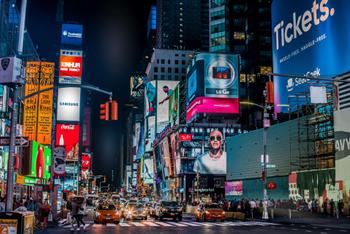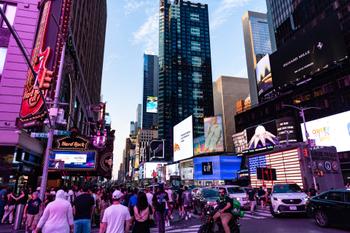
Programmatic digital out-of-home (pDOOH) is thriving, bringing digital speed and accountability to a medium built on real-world reach. But as the channel’s capabilities expand and campaigns become more sophisticated, so do the investment strategies behind them.
To better understand the trends and shifts defining today’s programmatic OOH marketplace, we analyzed aggregated transaction data from the Broadsign and Place Exchange SSPs — together representing the world’s largest independent programmatic OOH ecosystem, with more than 1.7 million programmatically-enabled screens and over 1.5 trillion available impressions each month.
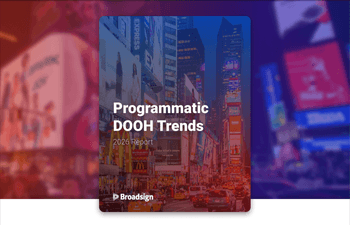
The result is Broadsign’s new 2026 Programmatic DOOH Trends Report: a comprehensive global snapshot of programmatic digital out-of-home activity. Drawing on full-year 2025 and Q1 2026 internal transaction data, it surfaces useful signals about what today’s buyers value — and how media owners can use those signals to inform inventory positioning and packaging strategies.
Read on for a sneak peek of some of the key findings you’ll find inside.
The programmatic digital out-of-home market is maturing
Programmatic DOOH is no longer limited to a small group of early adopters. Today’s advertiser mix reflects a channel that has proven its value across a wide range of business contexts and use cases — a clear sign of a maturing market.
Top Spending Advertiser Categories
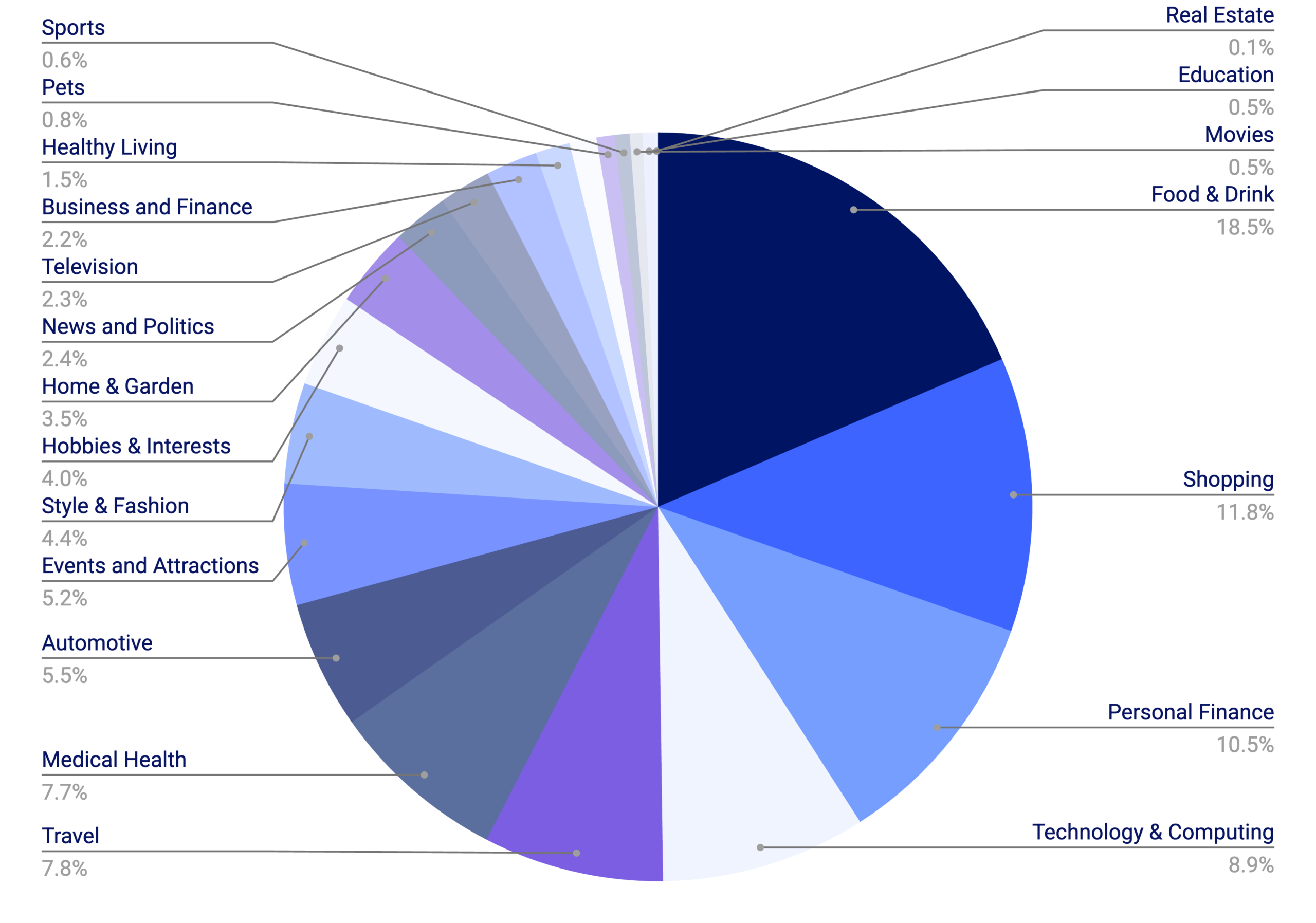
Food & Drink, at 18.5%, remained the largest advertiser category by spend share in 2025, followed by Shopping at 11.8% — reinforcing the channel’s strong fit for brands looking to influence consumer decisions close to the point of purchase. Meanwhile, Personal Finance (10.5%) and Technology (8.9%), the third- and fourth-largest categories, together accounted for nearly a fifth of all programmatic OOH spend last year, highlighting OOH’s appeal among categories with longer consideration cycles.
A diverse mix of demand is a strategic advantage for media owners. It reduces dependence on any single industry’s budget cycles while creating more opportunities to grow revenue across a range of advertiser categories and campaign objectives.
Programmatic DOOH spend extends beyond core outdoor environments
The broad-reach outdoor environments that out-of-home has long been known for continue to anchor programmatic OOH spend. But advertisers are also investing across a diverse range of other context-rich venue types, indicating strong demand to reach audiences in relevant moments throughout the physical world.
Spend distribution by venue category

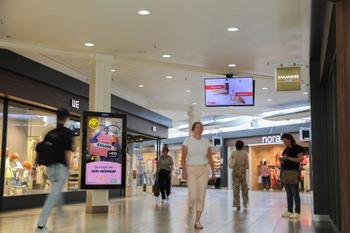
Outdoor accounted for nearly half (48.4%) of all 2025 spend, reflecting its unmatched ability to deliver wide coverage and cost-effective reach. Retail (18.5%) also occupies a distinct position in the mix thanks to its proximity to real-world purchase decisions. Transit (12.7%) and Entertainment (10.4%) venues followed, demonstrating strong buyer demand for high-dwell environments.
Reach is still the foundation of programmatic DOOH, but buyers aren’t taking a one-size-fits-all approach. They’re investing across a wide mix of venues to support different marketing objectives, making it more important than ever for media owners to highlight what makes each environment unique. The clearer the value proposition, the more opportunities to win new campaigns.
The market is rallying around a few key formats
Programmatic OOH creative — both video and display — is converging around a relatively small number of dominant formats, making cross-network activation (and cross-channel repurposing of creative assets) more straightforward for buyers and giving media owners a clear picture of what creative specs to prioritize.
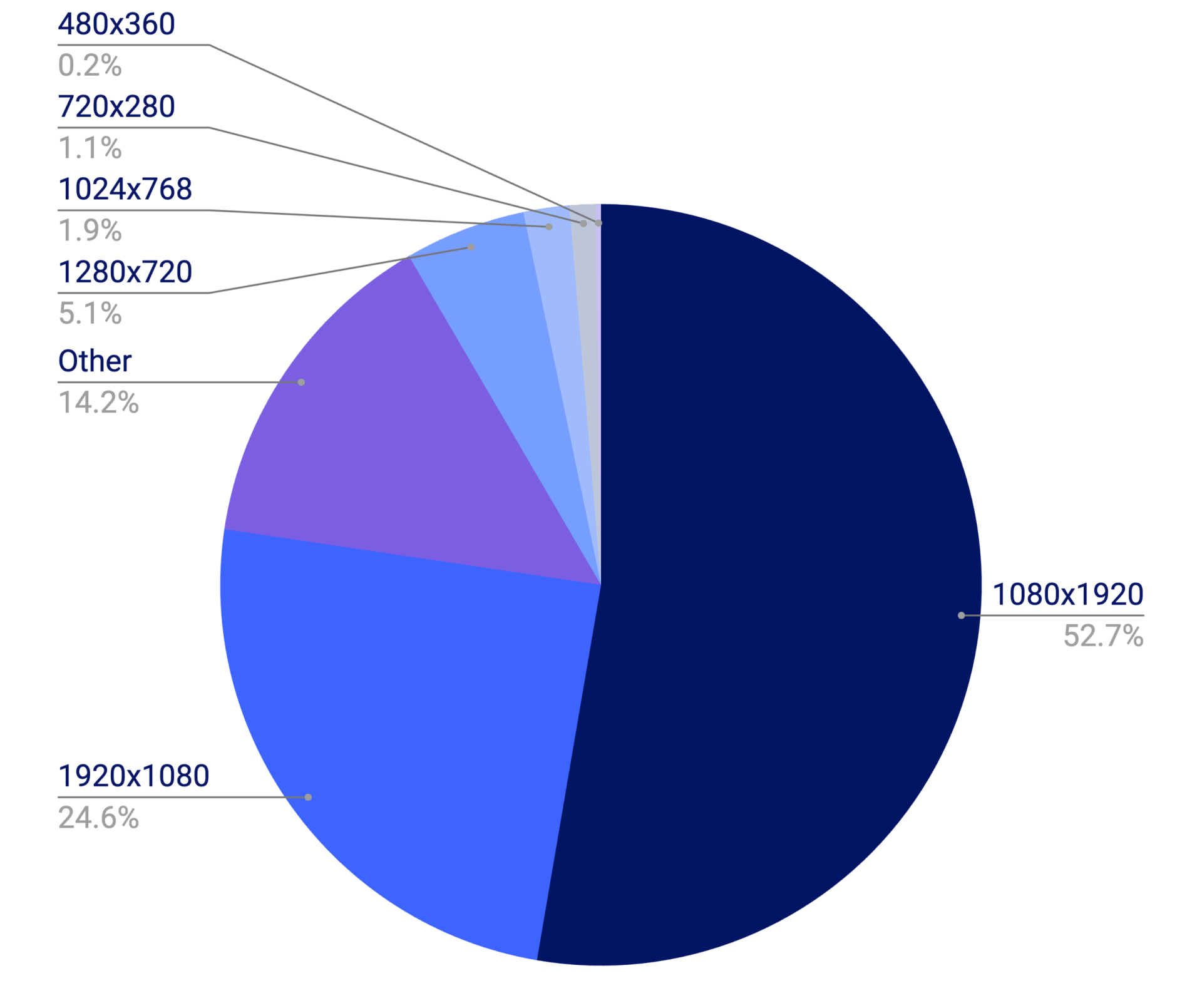
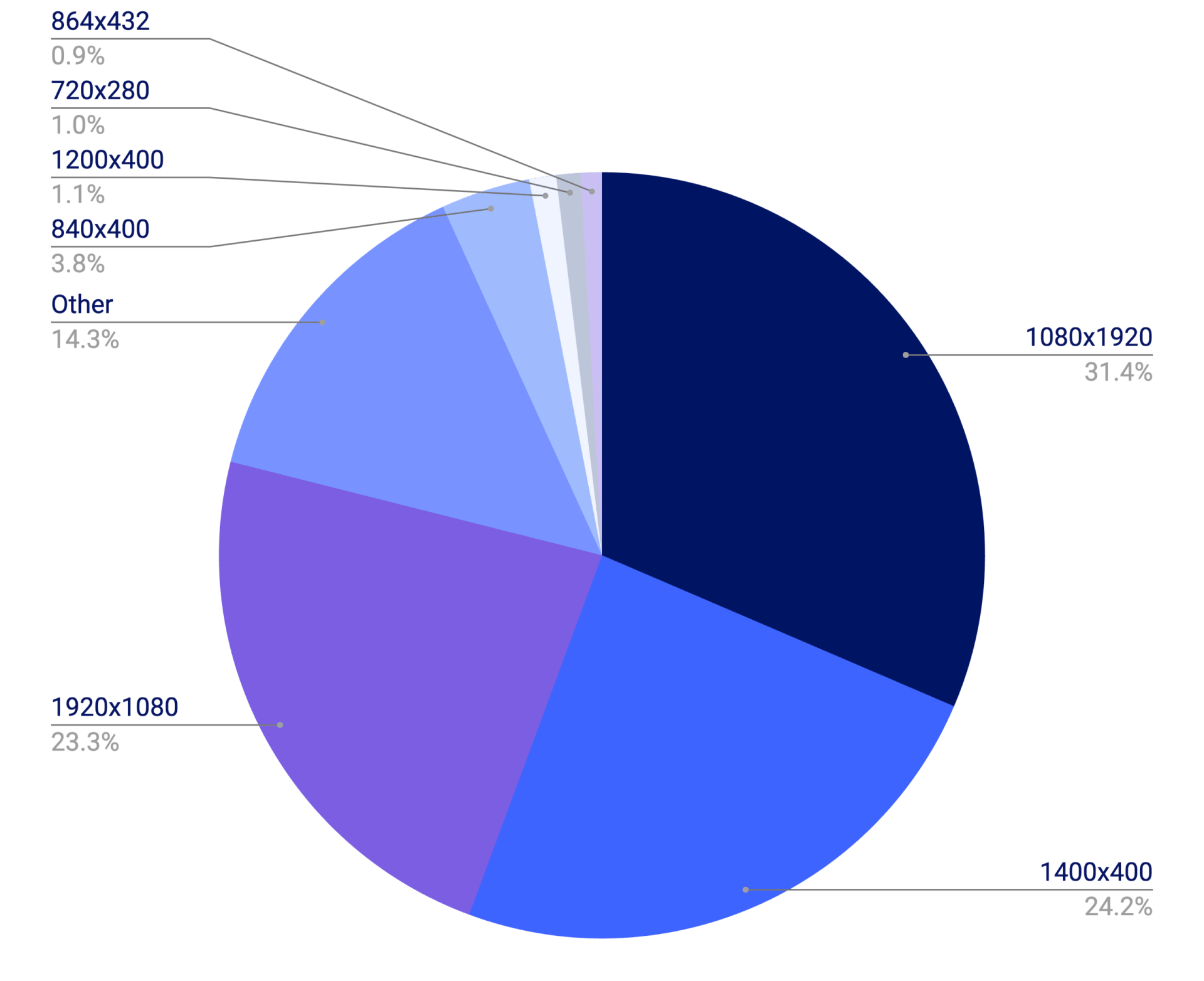
For example, just two asset sizes — 1080×1920 (vertical portrait) and 1920×1080 (landscape) — collectively accounted for 77% of all programmatic video spend in 2025. Similarly, the top three display ad sizes — 1080×1920 (31.4%), 1920×1080 (23.3%), and 1400×400 (24.2%) — made up 79% of total display spend.
Increasing standardization around creative specifications gives media owners a clear benchmark for the creative capabilities their network should support. Clearly communicating those capabilities — including supported formats, resolutions, and dynamic triggers — can simplify campaign activation and strengthen inventory positioning.
Buyers want curated, negotiated access to premium inventory
Similar to other programmatic channels, private marketplaces are the dominant transaction mechanism in programmatic OOH.
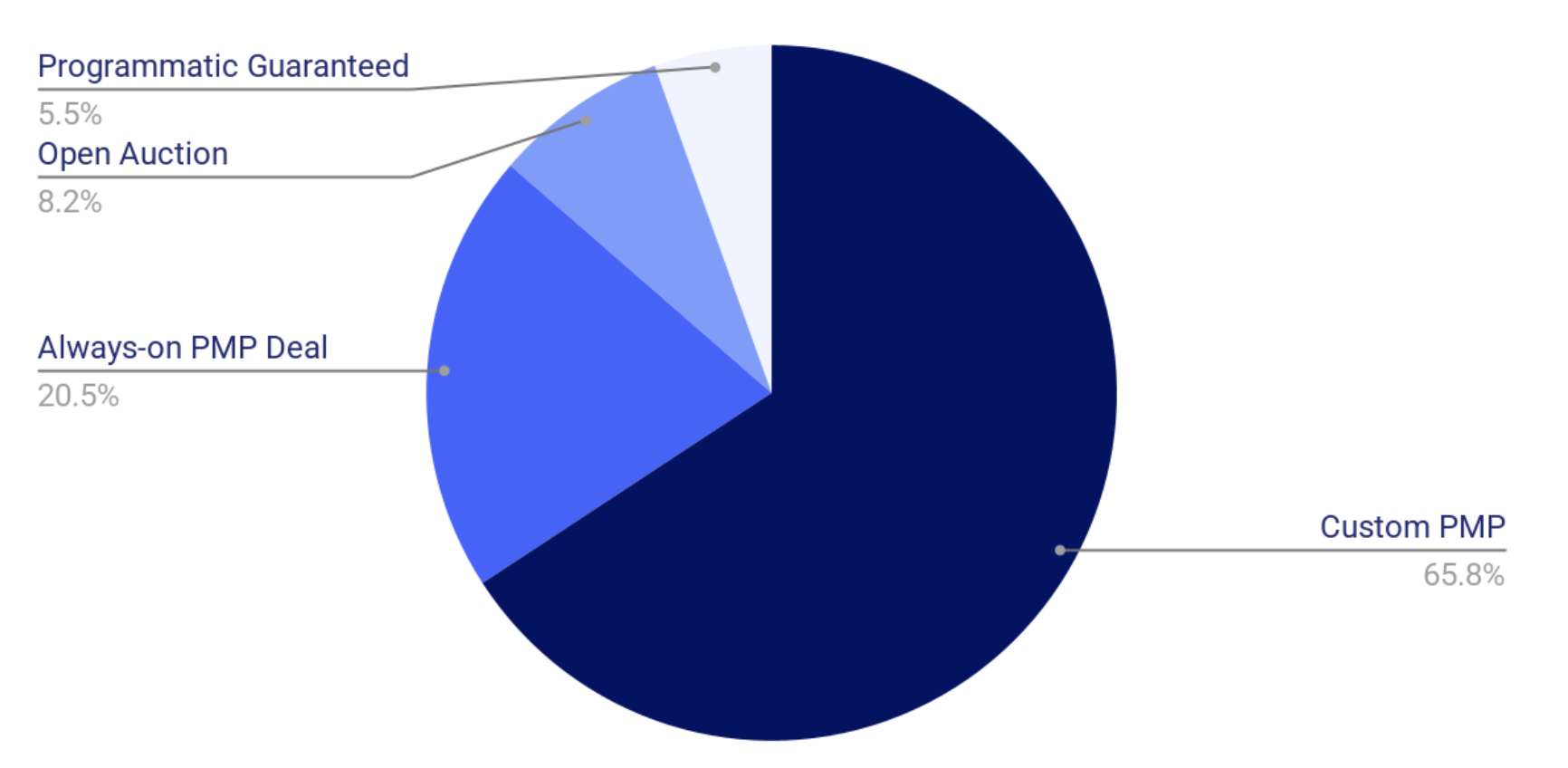
Custom Private Marketplace (PMP) deals — offering buyers the ability to construct deals against specific inventory and audience criteria — were the dominant transaction type in 2025, accounting for 65.8% of all programmatic OOH spend. Always-on PMP deals represented the second-highest share of overall spend (20.5%), highlighting strong demand for turnkey access to curated inventory without the need to establish new agreements.
While open auction remains an efficient way for media owners to make inventory broadly available to programmatic demand, buyers have shown a clear preference for negotiated exchanges and more controlled buying. To remain competitive, media owners should offer inventory through a range of transaction models — including Custom PMPs, Always-on PMPs, and Programmatic Guaranteed deals — to support different campaign requirements.
Explore more in-depth findings in our 2026 Programmatic DOOH Trends Report
Access additional benchmarks, regional trends, and category-level insights drawn from aggregated transaction data from the world’s largest independent programmatic OOH ecosystem.