The out-of-home industry is in the middle of a major transformation. As automation, programmatic buying, audience data, and more reshape how campaigns are planned and transacted, the industry is moving toward a more connected and scalable future.
Few people have had a front-row seat to that evolution quite like Burr Smith, Chairman, President, and CEO of Broadsign. Under his leadership, Broadsign has evolved from a digital signage CMS provider into one of the industry’s leading global OOH advertising platforms, helping unify the buy and sell sides of the market through automation, programmatic technology, and strategic acquisitions.
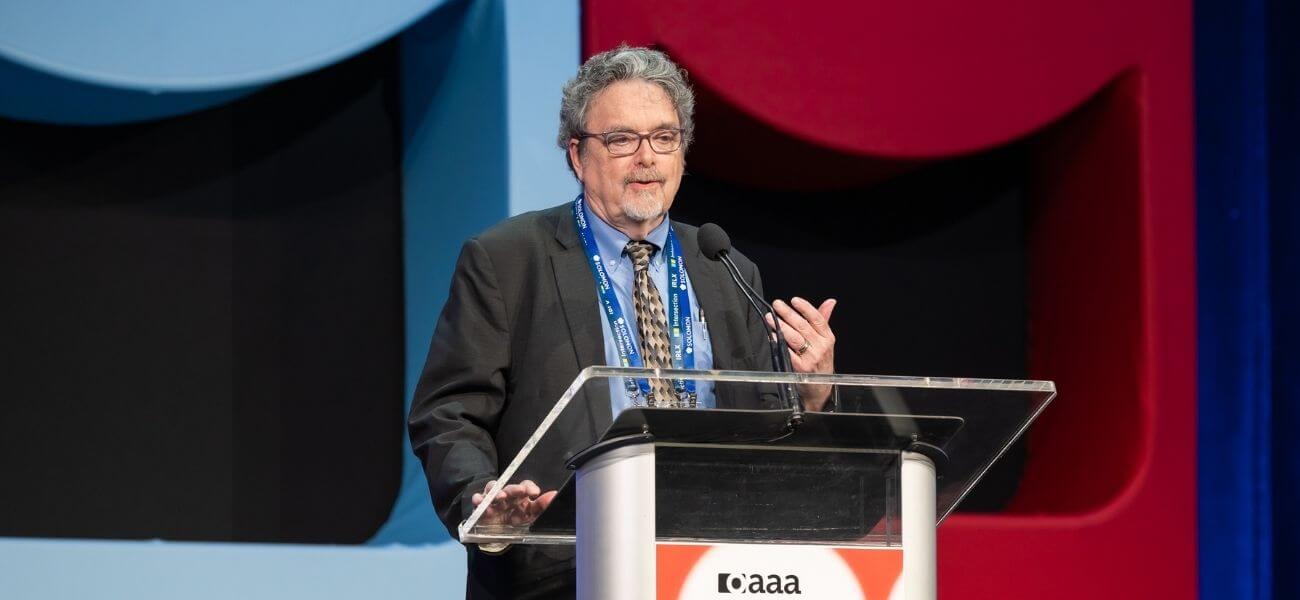
That impact was recently recognized by the Out of Home Advertising Association of America (OAAA), which honoured Burr with its inaugural Digital Transformation Award at the 2026 OAAA Honors Circle Awards. The award celebrates leaders driving the modernization of OOH through innovation, automation, and technological advancement.
We sat down with Burr to discuss how OOH has evolved, why unification matters, and what needs to happen next to keep the industry growing.
You’ve been focused on modernizing out-of-home for years. What did digital transformation in OOH look like when you first started, and how has that vision evolved over time?
When I became CEO, Broadsign was primarily a content management system (CMS) company. At the time, there was an internal discussion about whether we should remain focused solely on CMS technology, but it became clear to me that it wasn’t a sustainable long-term strategy. So we decided to evolve beyond content management and move closer to where the advertising dollars were actually originating: the demand side.
That meant building products across the ecosystem to better connect buyers, sellers, and media owners and, ultimately, reduce friction across the industry. That shift marked the beginning of Broadsign’s broader transformation and shaped the vision we continue to build toward today.
You’ve led Broadsign through multiple waves of transformation. How do you prioritize where to invest as the industry continues to evolve?
We invest in two ways: through products and through acquisitions. When we see an opportunity to acquire and integrate a company that can accelerate progress faster than building organically, we’ll often take that approach. It allows us to move more quickly and bring capabilities to market sooner.
Traditionally, we’ve focused our investments on technologies and capabilities that help connect different parts of the ecosystem more effectively over time. Sometimes, the fastest way to move the industry forward isn’t always the most obvious or direct one. It can mean building complementary products or investing in areas that help create a more connected and scalable market overall. Ultimately, the goal has always been the same: reducing friction across the industry and making it easier for advertising dollars to flow into out-of-home.
Where do you see the biggest disconnect between how OOH is perceived and what the medium is actually capable of?
I’d say the biggest challenge is that OOH still hasn’t reached the point where it’s as easy to buy as some other advertising channels. The industry has evolved quickly, and many companies are bringing new ideas and technologies to market, creating a wide range of workflows and solutions across the ecosystem.
Over the years, Broadsign has focused on building technology that helps create more seamless connections between the demand side and supply side. Publishers, agencies, and technology partners will always have their own approaches, and innovation is important, but the industry also needs more standardized and connected transaction paths that can scale efficiently.
The industry talks a lot about collaboration and growth. What does real collaboration actually look like across OOH?
OOH represents roughly 5% of the overall advertising market, and the focus is on how to continue growing that share. But the way to grow the industry isn’t by competing for incremental share within the existing programmatic market. Rather than competing for share within OOH or pDOOH, the bigger opportunity is growing the broader OOH market across both digital and static.
As the industry becomes more connected and standardized, OOH increasingly operates like other major media channels, making it easier for larger advertising investments to flow into the space. That’s one of the reasons we acquired Place Exchange. We’re committed to long-term industry growth, and over time, industries naturally consolidate as it becomes less practical for multiple companies to keep building the same technologies in parallel.
The acquisition strengthened our ability to help unify the ecosystem and create a more connected path between the demand side and supply side of the industry. We’re already seeing stronger momentum toward that kind of unification through greater consolidation and integration across the ecosystem, which is naturally attracting more investment and attention from the broader advertising industry.
What does the next phase of digital transformation in OOH look like over the next few years, and how do you hope it ultimately shapes the future of the industry?
The next phase of digital transformation really comes back to unification. A lot of people focus on growing the industry incrementally, but the most important thing is building a more connected market. That’s been a major focus for Broadsign for a long time, and it’s why we continue investing across different parts of the ecosystem, including static.
AI will also play an important role, particularly in improving operational efficiency. It can help streamline workflows, campaign planning, and many day-to-day processes. But at this stage, there’s a significant role for technology providers to support the end-to-end transaction infrastructure and the broader flow of ad dollars. Beyond that, any technology, trend, or opportunity that broadens the market ultimately accelerates industry growth. That’s part of the reason we’re also interested in areas like retail media and audience analytics.
Audience measurement will be especially important moving forward. OOH already has unique strengths as a medium because it exists so close to the point of purchase, but the industry still needs stronger audience analytics and measurement capabilities to fully demonstrate that value to advertisers.
You’ve emphasized culture as a core part of transformation. What role has it played in enabling meaningful change across the business?
Culture has been a huge part of Broadsign’s success. A lot of that comes back to our values and the fact that people genuinely believe in them. We try to make decisions based on doing the right thing for the business, our customers, and the industry overall. There’s very little internal politics because the focus has always been on building something better together.
That mindset becomes especially important during acquisitions and periods of transformation. When new teams come in, we don’t approach it from a place of protecting turf. If another company is doing something better, we want to learn from it and embrace it. That’s one of the reasons the Place Exchange acquisition worked so well. The two companies had very complementary strengths with very little overlap, so it wasn’t about duplicating efforts; it was about bringing together capabilities that made the combined business stronger.
What does the Digital Transformation recognition mean to you personally, and what impact are you most proud of?
I’m proud of what Broadsign has become and the role it’s played in moving the industry forward. Over the years, we’ve continued investing in products and acquisitions we believed would improve the industry, even when it sometimes took time for the market to fully adopt them.
We may not always move as quickly as some other industries, but we’ve always had a relentless focus on getting better and helping push the industry forward along the way. I think Broadsign has earned its position in the industry because our motivations have always been rooted in building something meaningful and creating long-term value for the ecosystem. I’m grateful to the OAAA for the honour because it reflects the collective effort behind everything we’ve built. We’re committed to this industry for the long term, and we’ll keep working to help it evolve, grow, and improve.