If you’ve been following the box office lately, you’ve probably noticed that movie theatres are packed again. Cinema is on track for its strongest year since before the pandemic, fueled by a steady stream of blockbuster releases and renewed demand for premium movie-going experiences.
Christopher Nolan’s The Odyssey is the latest example, generating more than $264 million globally during its opening weekend. More than half of its domestic box office revenue came from premium large format theatres, while IMAX alone generated over $51 million worldwide. And The Odyssey is just one of many films driving cinema’s resurgence. This year’s strong lineup of releases, including The Mandalorian and Grogu, Toy Story 5, Project Hail Mary, and The Super Mario Galaxy Movie, is bringing audiences back to theatres and keeping the momentum going.
The numbers reinforce the trend. Cinema attendance has reached 154 million tickets sold across the U.S. and Canada this year, up nearly 16% over 2025. Domestic box office revenue is also running 23% ahead of last year and is on pace to surpass $10 billion for the first time since 2019.
For advertisers, the resurgence represents more than a box office success story. It signals the return of a premium, high-attention environment where brands can reach large, engaged audiences at scale—and, thanks to programmatic buying, more easily integrate cinema into modern omnichannel campaigns.
Today’s cinema experience extends beyond the big screen
Many cinemas now offer luxury seating, expanded dining options, full-service bars, and upgraded lobby spaces, encouraging visitors to arrive early and stay longer. Reserved seating has also shifted more of the experience outside the auditorium, giving audiences additional time to browse concessions, socialize, and engage with digital screens before the movie begins.
For advertisers, that means more opportunities to connect with moviegoers beyond the big screen. According to the Fortune Business Insights Movie Theater Market Report, multiplexes account for 72.94% of the global cinema market. Because these large-format theatres are typically located in regional shopping malls and lifestyle centres, brands can extend their campaigns beyond the auditorium and engage consumers throughout high-traffic retail environments.
Cinema advertising opportunities
From arrival to concessions to the auditorium, advertisers can engage audiences through multiple formats that work together across the cinema journey.
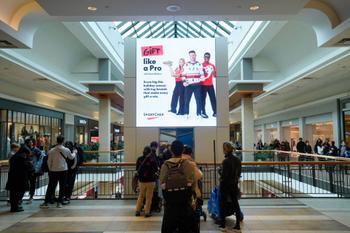
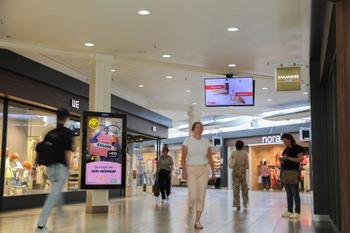
- Lobby and digital displays reach moviegoers as they arrive and move throughout the theatre. Digital posters, 6-sheets, video walls, and foyer screens capture attention while audiences wait, browse concessions, and socialize before the film.
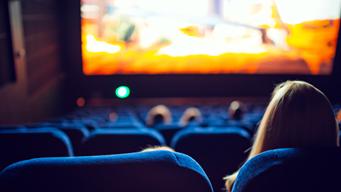
- On-screen pre-show advertising remains the flagship format. Played on the main screen before the feature begins, these ads deliver full-screen, distraction-free attention with no skipping or muting. Many cinema networks now make this premium inventory available through programmatic DOOH platforms.
- Experiential activations take engagement even further through branded installations, concession takeovers, standees, product sampling, and other interactive experiences that connect brands with audiences in memorable ways.


Premium audiences with undivided attention
In an era of endless scrolling and shrinking attention spans, cinema offers something increasingly rare: an audience that’s fully engaged. Moviegoers aren’t skipping ads, checking notifications, or flipping between channels—they’ve chosen to be there. Combined with large-format screens, immersive audio, and a distraction-free environment, that level of attention helps brands create stronger ad recall and deeper emotional connections than many traditional TV or mobile formats.
Beyond attention, moviegoers also represent a highly valuable audience. They tend to skew younger, more affluent, and more likely to spend on entertainment and experiences. Gen Z continues to lead attendance, with 87% having attended a movie in the past year and 41% going six or more times. For advertisers looking to reach younger consumers beyond increasingly crowded digital channels, cinema offers a rare combination of premium audiences and premium attention.
Cinema belongs in the modern media mix
Cinema’s resurgence is happening alongside a broader shift in the OOH industry. Advertisers are investing more heavily in digital, screen-based environments that deliver the flexibility, measurability, and automation expected from today’s media channels. According to the OAAA’s Q1 report, digital OOH now accounts for 36% of all OOH revenue, while digital place-based media grew 17% year over year—making premium environments like cinemas an increasingly important part of the media mix.
As more theatre inventory becomes available through pDOOH, cinema is no longer a standalone buy. Advertisers can activate campaigns alongside roadside DOOH, retail media, transit, display, CTV, and mobile using the same buying workflows, with unified reporting, attribution, and cross-channel measurement.
That opens up new possibilities for campaign planning. Rather than relying solely on a pre-show ad, advertisers can connect with audiences throughout the theatre experience—from digital screens in parking areas and lobbies to concession spaces and the auditorium—creating a more cohesive brand experience across multiple touchpoints.
Through Broadsign’s Place Exchange SSP, advertisers can access the largest movie theatre network in the U.S., reaching more than 65,900 screens and 1.6 billion four-week impressions. Whether extending an existing DOOH campaign or building a broader omnichannel strategy, cinema is now easier to access, easier to measure, and better connected to the rest of the media plan than ever before.